
Electronic Medical Records (EMR)
Care & med pass. HIPAA-compliant records and streamlined med pass with NFC checkpoints. E-prescribing and pharmacy connectivity via the Surescripts network.
Correctional Healthcare & E-Prescribing
Our EMR platform is designed for correctional healthcare environments. It combines electronic health records, medication administration records (eMAR), medical charting, and e-prescribing into a unified, HIPAA-compliant system. The EMR connects to the Surescripts network for electronic prescribing and medication history and supports EPCS (electronic prescribing for controlled substances) where required.
- Electronic health records – Charting, demographics, and clinical documentation in a secure, HIPAA-compliant environment.
- eMAR & med pass – Medication administration records and med pass workflows with NFC checkpoints for verification.
- E-prescribing – New prescriptions, renewals, and changes via the Surescripts network; access to thousands of pharmacies nationwide.
- EPCS – DEA-compliant electronic prescribing for controlled substances with two-factor authentication.
- Security & compliance – Certifications and safeguards for HIPAA and correctional healthcare. See Security & Compliance.
E-Prescribing Capabilities
Our e-prescribing platform supports:
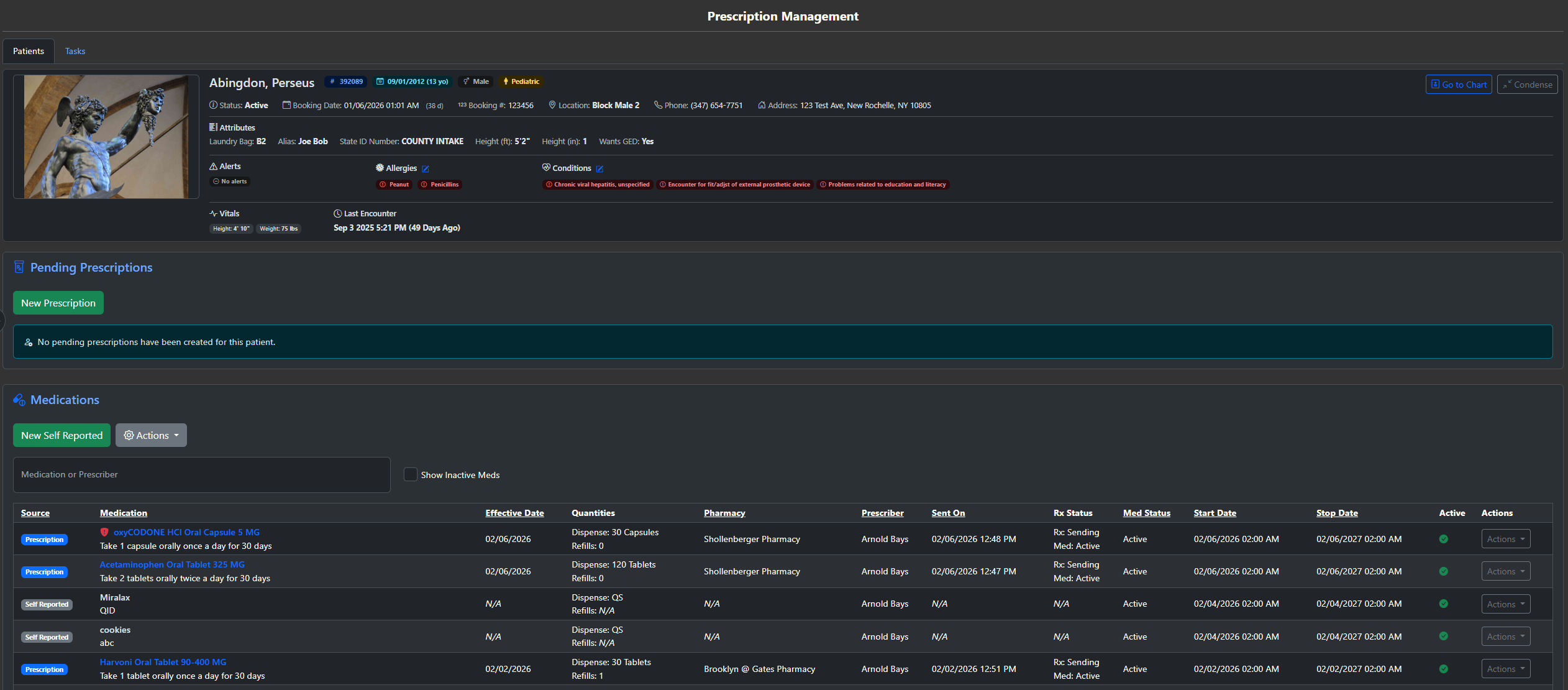
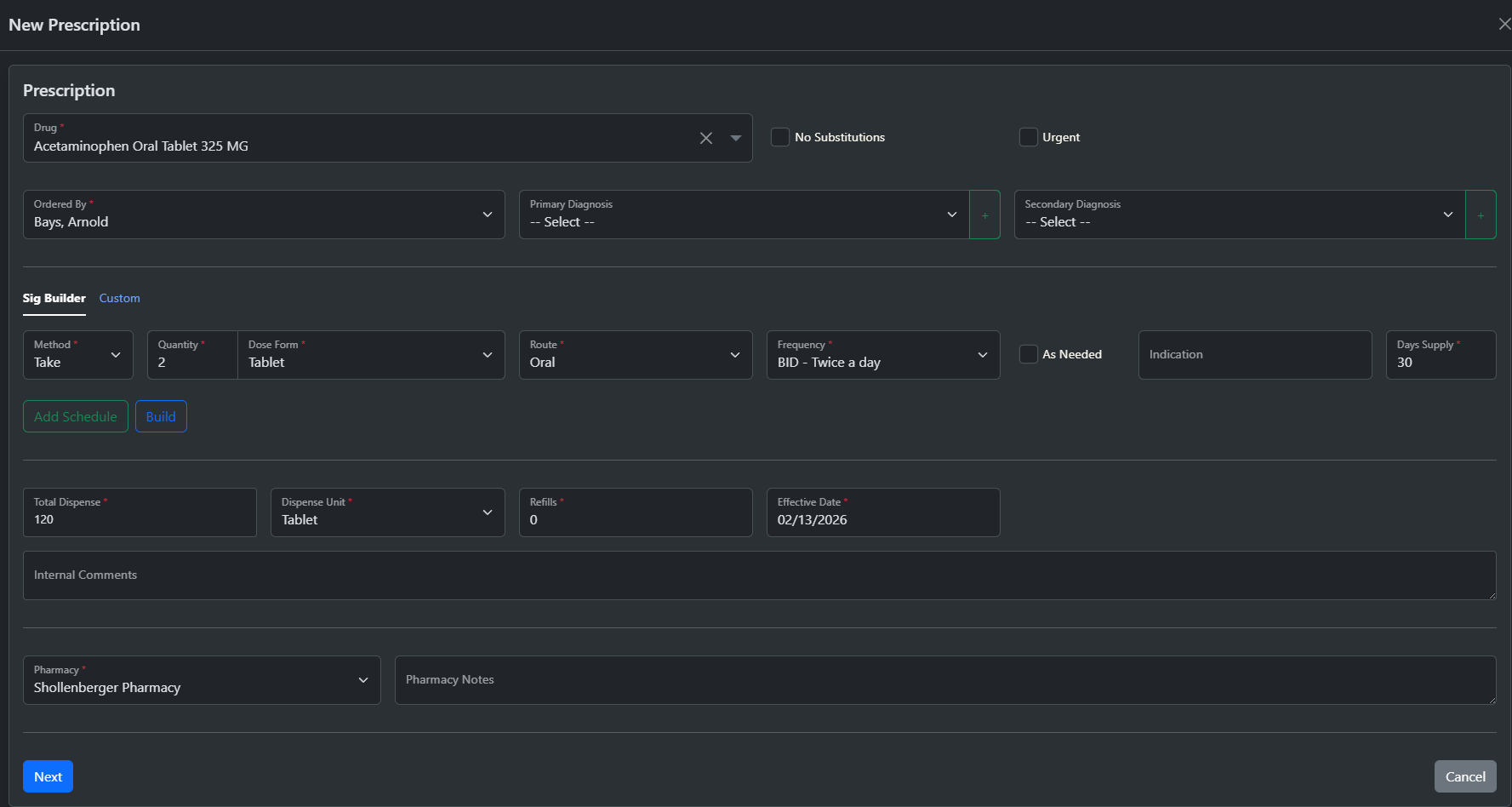
- New Prescriptions (NewRx) – Providers create and transmit electronic prescriptions directly from the patient encounter; the system validates prescription data, checks for drug interactions, and routes prescriptions to the facility's contracted pharmacy or to community pharmacies via the Surescripts network.
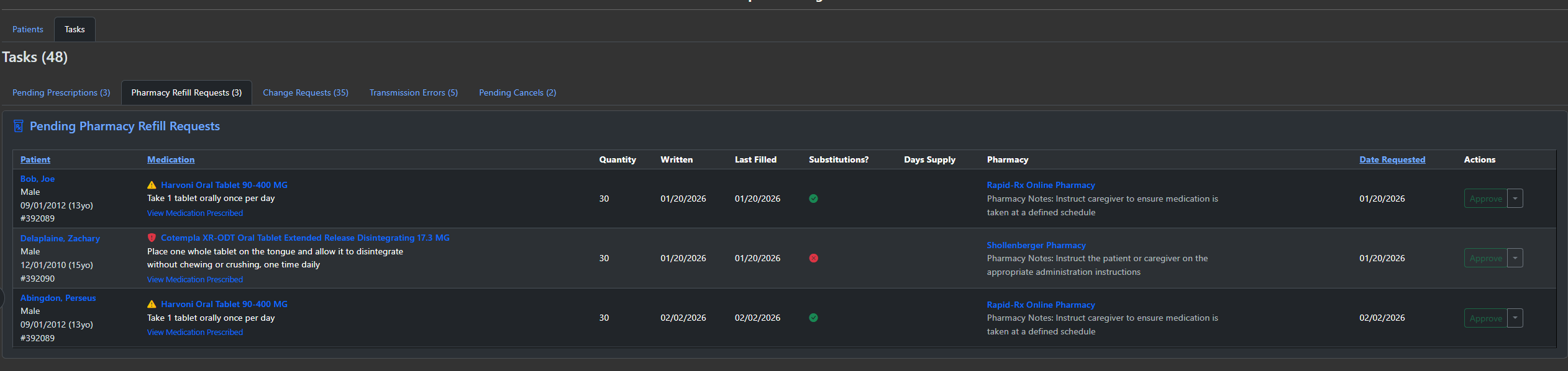
- Prescription Renewals (RxRenewal) – Refill requests from pharmacies are received and processed electronically; providers can approve, deny, or modify with full visibility into medication history and clinical context.
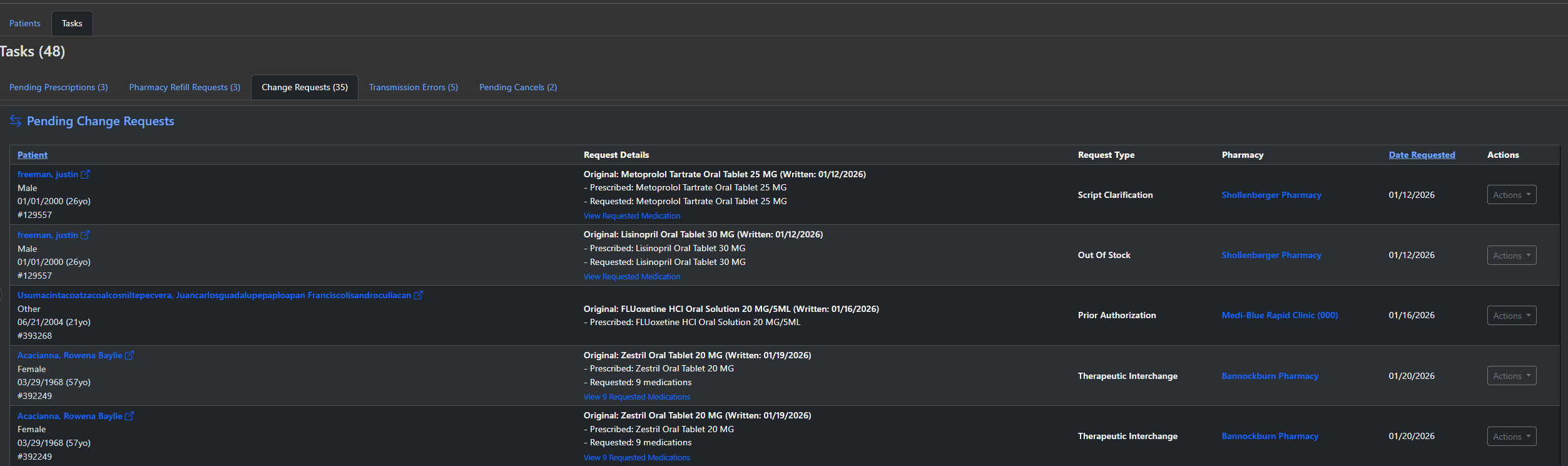
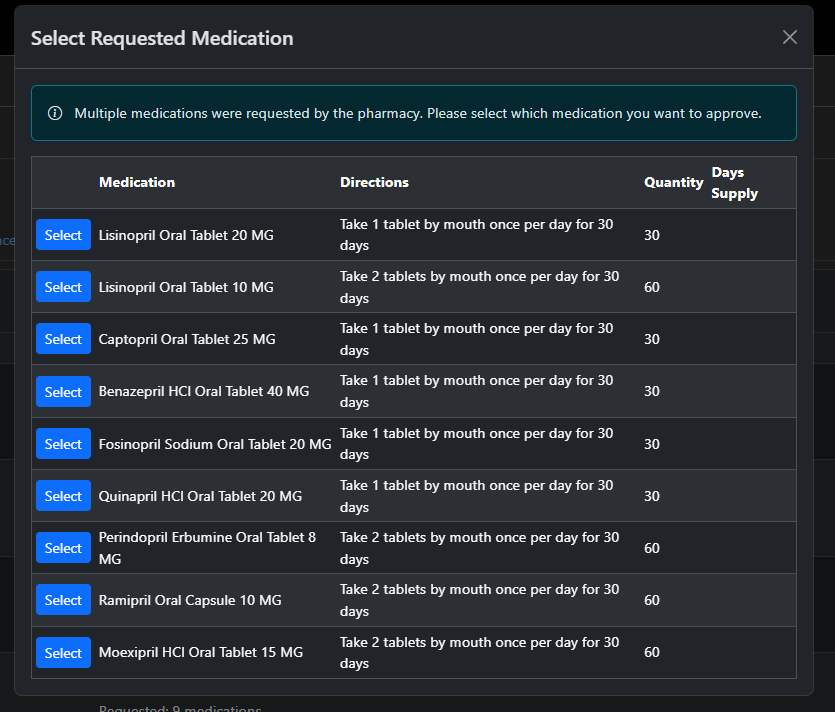
- Prescription Changes (RxChange) – Providers receive and respond to pharmacy requests for therapeutic substitutions, prior authorization, or other modifications within the clinical workflow.
- Medication History – Access to patient medication history from participating pharmacies and pharmacy benefit managers.
- Correctional-specific workflows – Intake medication reconciliation, Keep-on-Person (KOP) vs. Direct Observed Therapy (DOT) designation, release prescription preparation, formulary-based prescribing with therapeutic interchange support, and integration with on-site pharmacy dispensing systems.
Pharmacy Network
- Surescripts Network – Certified transmission with access to over 67,000 retail pharmacies nationwide for release prescriptions, specialty medications, and community pharmacy where permitted.
- Correctional pharmacy integrations – Direct integrations with major correctional pharmacy providers for electronic ordering, real-time formulary checking, automated eMAR updates, and inventory management.
- 340B Program Support – For facilities in the 340B Drug Pricing Program, compliant prescription routing and tracking with full audit trails.
Electronic Prescribing for Controlled Substances (EPCS)
Our EPCS module enables secure electronic prescribing of Schedule II–V controlled substances in compliance with DEA regulations. Facilities that prescribe controlled substances can use our EMR platform to meet federal and state EPCS requirements.
Our EPCS functionality meets all requirements under 21 CFR Part 1311, including:
- Third-party audit by DEA-approved auditor
- Two-factor authentication using separate factors
- Identity proofing through certified credential service provider
- Logical access controls and audit trails
- Prescription data integrity protections
As of 2025, most states require or will soon require electronic prescribing for controlled substances. Our platform supports compliance with state EPCS mandates. We also integrate with state Prescription Drug Monitoring Programs (PDMPs) to provide prescribers with patient controlled substance history at the point of care.
Prescribers must complete identity proofing and two-factor authentication setup before prescribing controlled substances electronically. Contact your facility administrator for enrollment assistance.
Prescriber Autonomy in Medication Selection
Cadmus is committed to supporting independent clinical decision-making. Our e-prescribing platform:
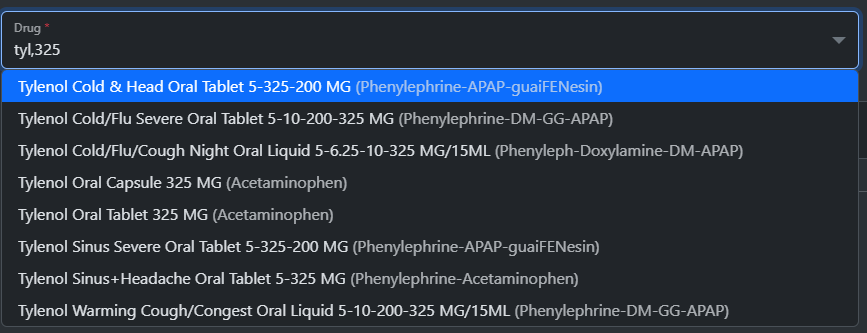
- Provides Access to All Medications. Prescribers can search and select from a comprehensive drug database containing all FDA-approved medications. The system does not restrict access to any medication based on manufacturer, price, or therapeutic class.
- Supports Clinical Decision-Making Without Steering. While our platform displays formulary information, therapeutic alternatives, and clinical alerts from reputable sources, these features are informational only. The system does not: require selection of specific medications; penalize or create friction for non-formulary selections; offer economic incentives tied to medication choice; or automatically substitute medications without prescriber authorization.
- Respects Prescriber Judgment. Formulary alerts and therapeutic suggestions can be acknowledged and bypassed at the prescriber's discretion. Dispense As Written (DAW) instructions are fully supported when clinically appropriate.
- Custom Favorites. Individual prescribers may create personal medication favorites or templates based on their clinical practice. These lists are provider-created and provider-controlled.
- Facility Formulary Transparency. When facilities maintain formularies, the system clearly identifies formulary status as informational guidance. Non-formulary medications remain accessible, with documentation workflows for exceptions when required by facility policy.
Patient Pharmacy Selection Rights
Cadmus supports patient choice in pharmacy selection to the extent permitted within correctional healthcare settings:
- Access to All Pharmacies. Our platform provides access to the complete Surescripts pharmacy directory, including: all retail chain pharmacies; independent community pharmacies; mail-order pharmacies; specialty pharmacies; and 24-hour pharmacies.
- No Pharmacy Steering. The system does not: default to specific pharmacies based on economic arrangements; create barriers to selecting any particular pharmacy; offer incentives for pharmacy selection; or rank pharmacies based on non-clinical factors.
- Correctional Setting Considerations. We acknowledge that pharmacy choice within correctional settings operates differently than in community healthcare:
- During Incarceration: Medication dispensing typically occurs through facility-contracted pharmacy services for security, accountability, and operational reasons. This is a facility operational decision, not a system limitation.
- Upon Release: When patients are preparing for release or transitioning to community supervision, our platform fully supports prescription routing to any community pharmacy of the patient's choice. Release planning workflows prompt pharmacy selection for continuity of care.
- Specialty Medications: When specialty medications are not available through facility pharmacy services, prescriptions can be routed to appropriate specialty pharmacies based on clinical requirements and patient preference.
- Patient Notification. Where facility policy permits, patients are informed of pharmacy options available to them and any restrictions that apply based on their custody status.
Platform Screenshots
Below are redacted screenshots from the Cadmus EMR e-prescribing workflow. All patient data shown is fictitious test data.
Ideal For
County jails, detention centers, and correctional facilities that need HIPAA-compliant medical records, e-prescribing, and med pass in one integrated platform.